Roof Leak Water Damage in San Bernardino, CA
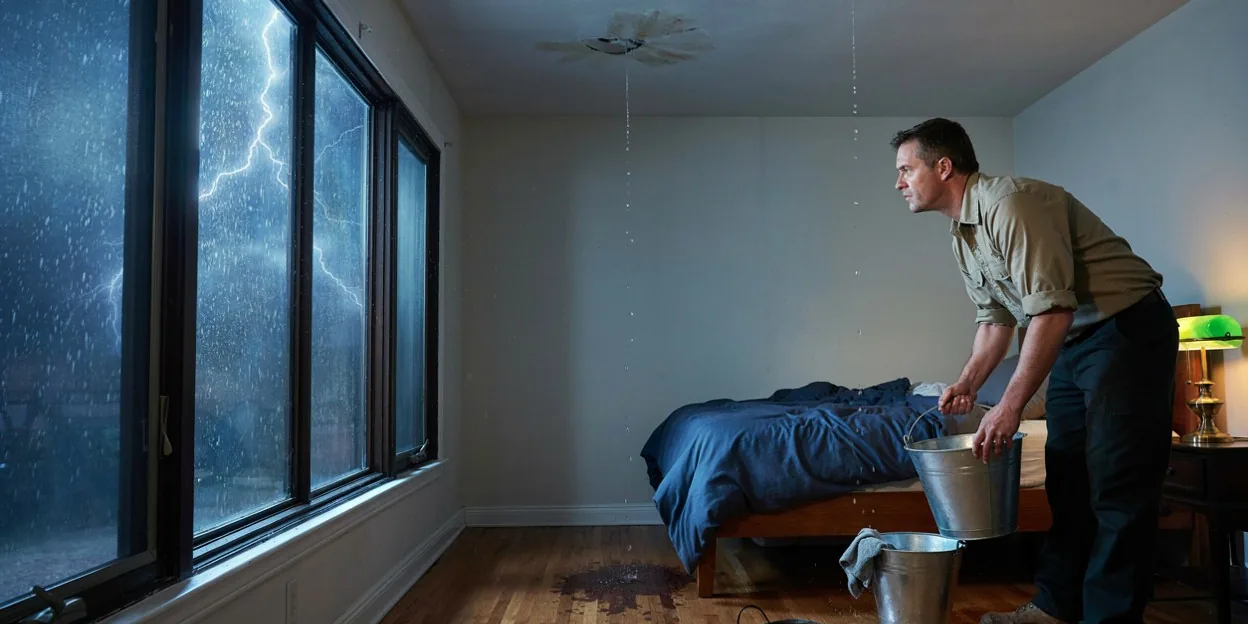
The August thunderstorm lasted forty minutes. By the time it moved off toward the mountains there was a brown ring on the bedroom ceiling the size of a dinner plate, and it was still growing an hour later. Or the snow that sat on the cabin roof since February finally melted, and it came in around the chimney. This site connects you by phone with an independent local provider who handles roof leak water damage in San Bernardino County.
What the crew does first
The crew starts above the stain. They get into the attic with a light and a meter and follow the water back to where it came in, which is often several feet from where it shows on the ceiling. Water runs along rafters and the top of the drywall before it finds a seam or a light fixture to drip through.
Then they meter the ceiling, the insulation, and the walls below the stain. Wet blown-in insulation gets pulled, because it holds water against the drywall and the framing. A sagging ceiling gets drained in a controlled way or opened before it comes down on its own. Air movers and a dehumidifier go in once the roofer has stopped new water from coming in.
What to do in the next hour
Put a bucket under the drip and move furniture and electronics out from under the stain. If the ceiling is bulging, stay out from under it and keep children and pets out of the room. Do not poke it. If water is near a light fixture or a ceiling fan, turn off that breaker.
If it is still raining, a tarp on the roof is a job for someone with the right footing and equipment, not for a homeowner on a wet ladder. Photograph the stain and the wet floor below it. Then call. The roofer and the drying crew are two different trades, and you will likely need both.
What is usually saved and what is not
Ceiling drywall that got damp but did not sag usually dries in place. Drywall that sagged, bubbled, or took water for more than a day comes out. Blown-in and batt insulation that got wet comes out. Framing dries. Hardwood or laminate under the drip is a maybe, and carpet under a ceiling leak usually dries if the pad is checked.
Ask the crew to show you the readings above the ceiling, not just on it. The drying that follows is structural drying. If the water came down a wall and into the cabinets or the floor, the same visit covers water extraction in the room below.
San Bernardino County notes
Valley roofs sit dry for six or seven months, then get tested all at once. Summer monsoon moisture rides up from the Gulf of California in July and August and builds thunderstorms over the mountains that drift out over Highland, Redlands, and Yucaipa, dropping an inch of rain in an hour on roofs that have baked since spring. Cracked tile underlayment, dried-out pipe boots, and clogged valleys give up the first time they see real water. Santa Ana winds in October and November lift tiles and shingles, and the first winter storm finds the gap.
The mountains take snow load and ice dams that most Southern California roofs never see. Late February 2023 put more than seven feet of snow on Crestline and Lake Arrowhead, collapsed a grocery store roof, and left ceilings stained across the mountain when it melted from underneath. Flat and low-slope roofs on older cabins in Big Bear City and Running Springs are the usual victims. The High Desert gets the wind. Adelanto and Victorville roofs lose ridge caps in a spring windstorm and take the next storm straight into the attic.
Many policies cover sudden roof leak damage from a storm, and many exclude damage from a roof that had worn out over years. Ask the crew to photograph the entry point and the wet insulation before it is bagged. The roof repair is the roofer's permit. Drying needs none.
Calling about roof leak water damage
Call (909) 494-5349 now and tell us what you see: where the stain is, whether it is still dripping, whether the ceiling is sagging, and whether a roofer has already been out.