Water Heater Leak Cleanup in San Bernardino, CA
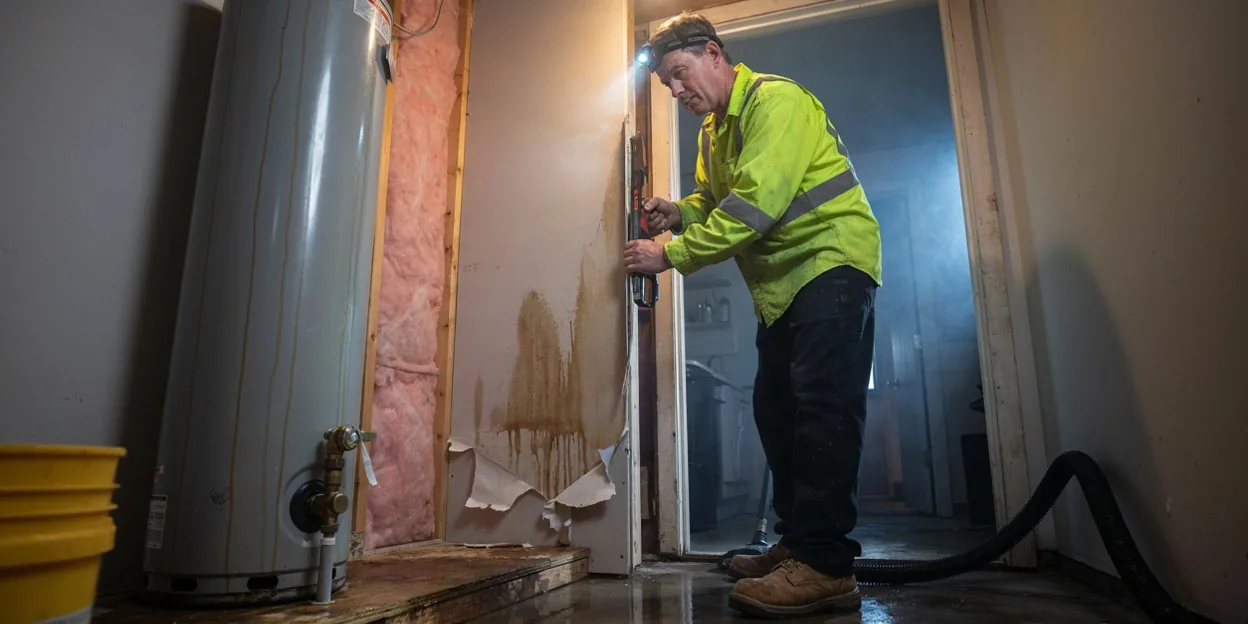
You went out to the garage for the car and stepped into a puddle that reached from the water heater to the door. On the other side of that wall, the hallway carpet was wet and the bottom of the closet door had swelled. The tank was twelve years old and had been sitting in a garage that hits 110 degrees every August. This site connects you by phone with an independent local provider who does water heater leak cleanup in San Bernardino County.
What the crew does first
The crew confirms the cold supply to the tank is closed and the gas or the breaker is off. Then they follow the water. A tank in a garage drains across the slab and under the wall into whatever room shares that wall, and a tank in a hall closet floods the hall and the rooms on either side. A tank in an attic, which some valley homes have, comes down through the ceiling.
They pump and vacuum the standing water, then meter the bottom of the drywall on both sides of the wall, the flooring along the path, and the bottoms of any cabinets or built-ins. The drywall behind the tank almost always reads wet, because the leak often started as a slow drip weeks before the tank let go.
What to do in the next hour
Close the cold-water valve on top of the tank. If it will not turn, close the house valve. Turn the gas valve on the tank to off, or flip the breaker for an electric unit. Do not try to drain the tank yourself if the water is hot.
Move boxes, tools, and anything stored on the garage floor out of the wet area. Open the closet doors on the other side of the wall. Take photos of the puddle, the tank, and the wet wall. Then call. The plumber replaces the tank. The cleanup crew dries the building, and both often come the same day.
What is usually saved and what is not
A sealed garage slab dries in place. Drywall that got wet at the base usually dries with a cavity setup if the water was clean and did not stand for long, but drywall behind a tank that dripped for weeks usually comes out. Carpet in the room next door often can be saved if the pad comes out. Particleboard shelving and cabinet bottoms swell and come out. Cardboard boxes and anything in them are usually a loss.
Ask the crew to meter the wall behind the tank, not just the floor. The drying that follows is structural drying. If the tank sits in a hall closet inside the house, the same visit may cover water extraction across several rooms.
San Bernardino County notes
Heat kills water heaters early here. A garage on the valley floor in Fontana or Rialto or up in Hesperia runs well past 100 degrees for weeks every summer, and the tank cycles harder to keep up while the fittings and the anode wear faster than the label suggests. Hard groundwater across the San Bernardino basin builds scale on the bottom of the tank, which is where most of them finally rust through.
Most valley and desert homes keep the tank in the garage on a stand, which helps. The trouble is that the garage almost always shares a wall with a bedroom or a hallway, and the slab runs under that wall without a break. Water goes under the wall and into the house before it reaches the garage door. Older homes near downtown San Bernardino and in Colton sometimes keep the tank in a hall or kitchen closet, and those leaks land in the middle of the house.
In the mountains, a tank in a cabin utility room on a raised floor sends water through the subfloor into the crawl space, and a tank that froze in an empty Big Bear cabin splits at the fitting when it thaws. A tank installed without a drain pan, or with a pan whose drain line was never connected, can empty onto the floor for hours before anyone notices.
Many policies cover the sudden damage from a failed tank but not the tank itself. Ask the crew to photograph the tank and the first-day readings before the plumber hauls the old unit away. A new tank usually needs a plumbing permit from the city, or from the county in unincorporated areas.
Calling about water heater leak cleanup
Call (909) 494-5349 now and tell us what you see: where the tank sits, whether the water is off, which rooms the water reached, and whether a plumber is on the way.