Water Damage Restoration in Grand Terrace, CA
Grand Terrace is a small city of about three and a half square miles on a bench above the Santa Ana River between Colton and Riverside, with Blue Mountain rising behind it. It incorporated in 1978, and most of the housing went up in the two decades before and after that: single-story slab ranch homes from the 1960s and 1970s along Barton Road and Mount Vernon Avenue, and larger two-story homes from the 1980s and 1990s on the slopes toward the mountain.
The terrace drains fast. Rain off Blue Mountain runs down the streets toward the river, and a monsoon cell in August can put water into a garage at the low end of a block in minutes. The rest of the year the losses come from inside: fifty-year-old copper under the slab, a water heater that cooked in a hot garage, and a washer hose that hardened and split.
Call us now and tell us what you see. We connect Grand Terrace homeowners with an independent local water damage provider who looks at the house and sets the scope.
Grand Terrace water damage, on the bench
A pinhole under a 1970s slab is leak detection first. Water that ran from the garage under the wall into a hallway is water extraction, and the drying that follows is structural drying by the meter.
Where to call in Grand Terrace
Water service comes from the Riverside Highland Water Company, a mutual company that has served the terrace since 1898 and can shut off at the meter. Rebuild permits go through the Building and Safety Division at the City of Grand Terrace.
Call (909) 494-5349 now and tell us what you see. We connect you with a local water damage provider serving Grand Terrace.
Services Available in Grand Terrace
Water Extraction
Standing water pumped and vacuumed out of the house, then the first moisture readings to see where it spread across the slab.
Structural Drying
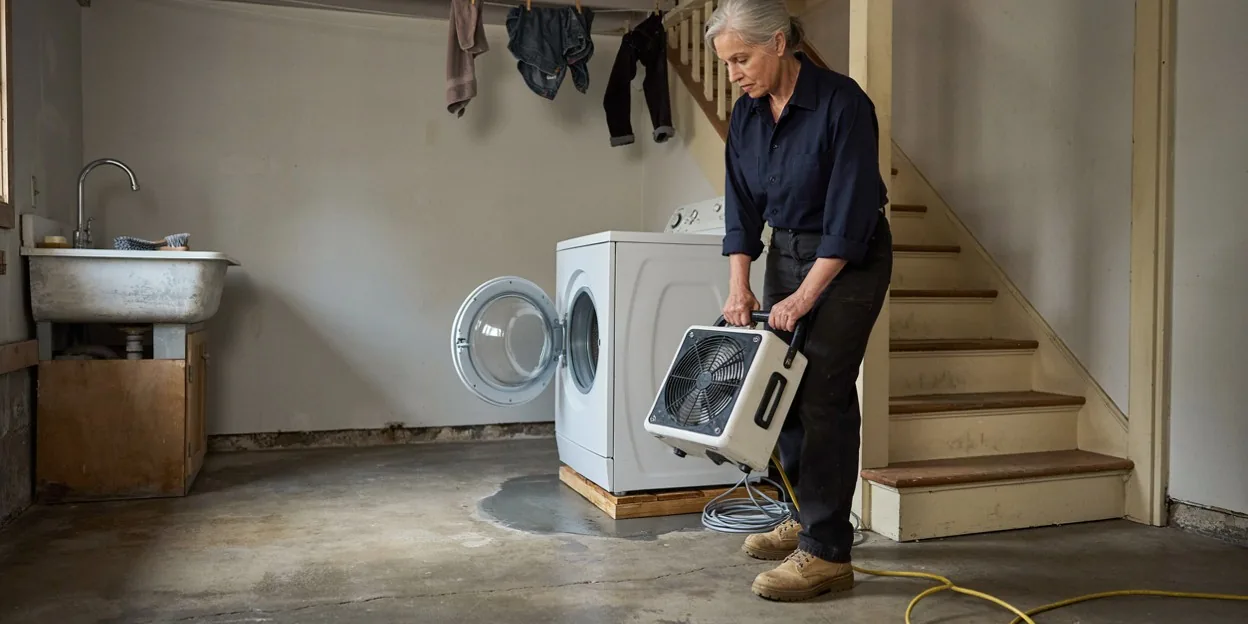
Air movers and dehumidifiers set by the readings, with checks until drywall, subfloor, and framing come back to their dry target.
Leak Detection
Finding a hidden slab, wall, or supply-line leak under a valley tract home before anyone cuts concrete or opens a wall.
Burst Pipe Water Damage
The rooms, floors, and walls a failed or frozen supply line reached, pumped out and dried once the valve is closed.
Roof Leak Water Damage
Wet insulation, ceilings, and walls dried out after a monsoon downpour, a Santa Ana windstorm, or mountain snow got through the roof.
Water Heater Leak Cleanup
A failed tank in a garage, closet, or side yard and the flooring and drywall it soaked before anyone noticed.
Sewage Cleanup
Sewer backup and black-water removal with protective gear, contained disposal, and disinfection of the surfaces it touched.
Appliance Leak Cleanup
Water from a dishwasher, washer, fridge line, or swamp cooler traced under cabinets and flooring, then dried.